Facebooktwitterredditpinterestlinkedintumblrmail

A study published in the August issue of the Journal of Pediatrics found that the spines of boys and girls are different at birth. This difference aids in childbearing, but likely imparts a greater susceptibility for scoliosis and osteoporosis in females.

SOURCE: Childrens Hospital Los Angeles

Released: July 24, 2015

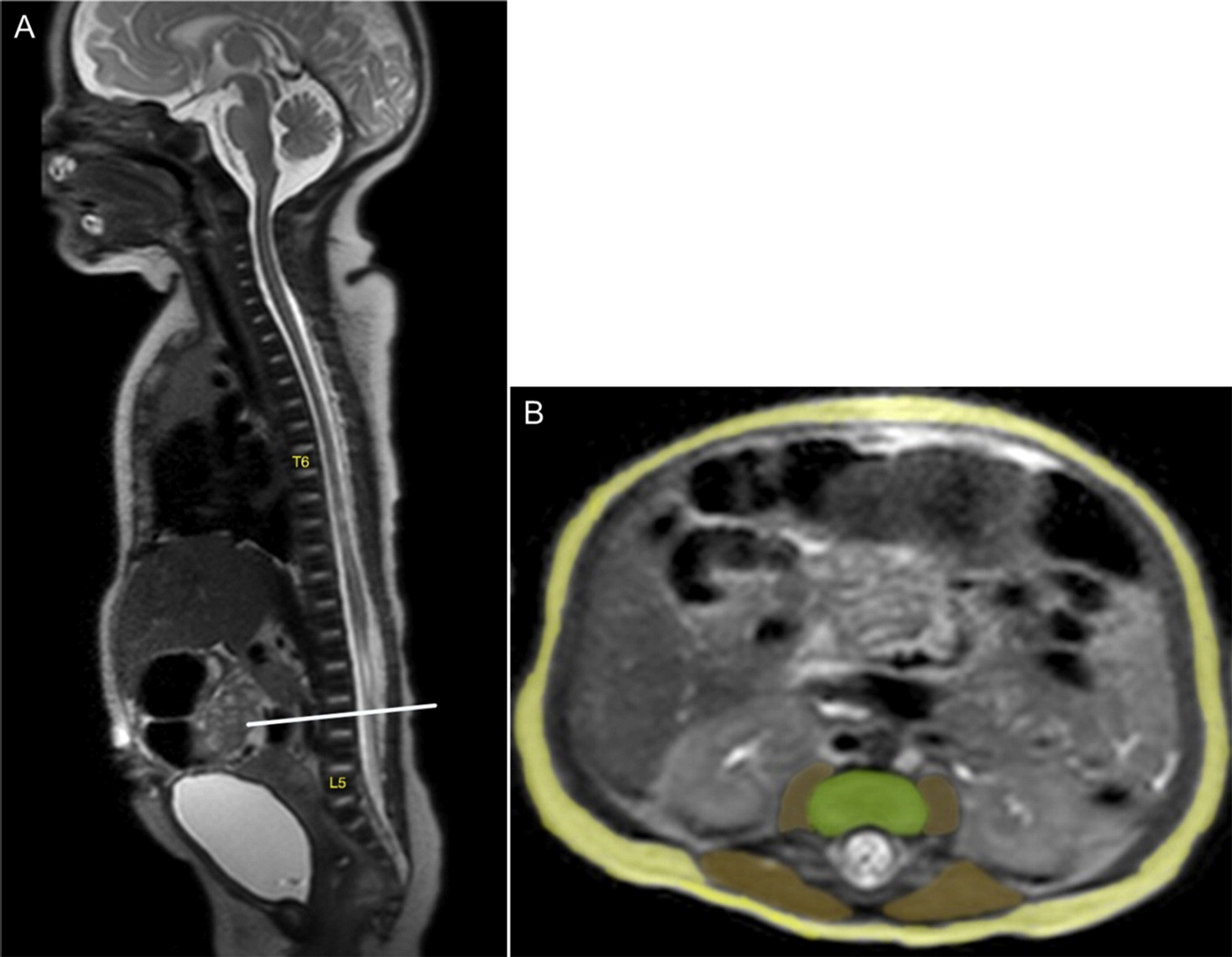
Looking at measurements of the vertebrae – the series of small bones that make up the spinal column – in newborn children, investigators at Children’s Hospital Los Angeles found that differences between the sexes are present at birth. Results of the study, now online in advance of publication in the August issue of the Journal of Pediatrics, suggest that this difference is evolutionary, allowing the female spine to adapt to the fetal load during pregnancy.

Baby Spine

Using magnetic resonance imagining (MRI), the researchers found that vertebral cross-sectional dimensions, a key structural determinant of the vertebra’s strength, were 10.6 percent smaller on average in newborn females than in males.

“Human beings are the only mammals in which this difference is seen, and it is one of the few key physiological differences between the sexes,” said Vicente Gilsanz, MD, PhD, director of the Research Imaging program at The Saban Research Institute of Children’s Hospital Los Angeles and senior author on the study.

“The reason could be that the spine has to move forward during pregnancy, so that the female can walk and maintain her center of gravity. Unfortunately, it also imparts a disadvantage in that it increases stress within the vertebrae for all physical activities, resulting in a great susceptibility for fractures later in life.”

“Although we’ve known that girls had smaller vertebrae than boys, we did not know how early this difference first occurred,” added Gilsanz, who is also professor of radiology at Keck School of Medicine of the University of Southern California. “Our study indicates that the distinction between sexes is already present at birth, and provides new evidence that this difference begins during prenatal development of the axial skeleton.” While the mechanisms responsible for the smaller female vertebral body during the fetal stages of skeletal development remain unknown, it likely results from complex interactions involving sex steroids, growth hormone and insulin-like growth factor.

In the study, 70 healthy, full-term newborns (35 boys and 35 girls) were measured. Weight, body length, and head and waist circumference did not significantly differ between sexes. Compared to newborn boys, girls had significantly smaller vertebral cross-sectional dimensions – a difference independent of gestational age, birth weight and body length. The study notes that, over their lifetimes, women also accumulate less bone mass than men, resulting in a two- to four-fold increase in spinal fracture. A deficiency in vertebral growth in girls is associated with greater spinal flexibility and lower peak bone mass in young women, eventually resulting in an increased likelihood of scoliosis as well as osteoporosis in later life.

“While girls are born with a predisposition to developing osteoporosis as older adults, we know that bone development can be optimized with exercise and nutrition,” said Gilsanz. “This is an example of how traits that might predispose an individual to disease can be mitigated through personalized medicine and customized health care, beginning early in life.”

Additional contributors to the study include first author Skorn Ponrartana, MD, PhD, Patricia C. Aggabao, BA, Naga L. Dharmavaram, BS, Carissa L. Fisher, BS, and Philippe Friedlich, MD, MS, EPI, MBA, of Children’s Hospital Los Angeles; and Sherin U. Devaskar, MD, of Mattel Children’s Hospital, David Geffen School of Medicine, UCLA. Funding was provided by the National Institute of Diabetes and Digestive and Kidney Disease grant R21DK090778.

About Children’s Hospital Los Angeles
Children’s Hospital Los Angeles has been named the best children’s hospital in California and among the top 10 in the nation for clinical excellence with its selection to the prestigious U.S. News & World Report Honor Roll. Children’s Hospital is home to The Saban Research Institute, one of the largest and most productive pediatric research facilities in the United States. Children’s Hospital is also one of America’s premier teaching hospitals through its affiliation since 1932 with the Keck School of Medicine of the University of Southern California. For more information, visit CHLA.org. Follow us on Twitter, Facebook, YouTube and LinkedIn, or visit our blog at http://researchlablog.org/.
Facebooktwitterredditpinterestlinkedintumblrmail


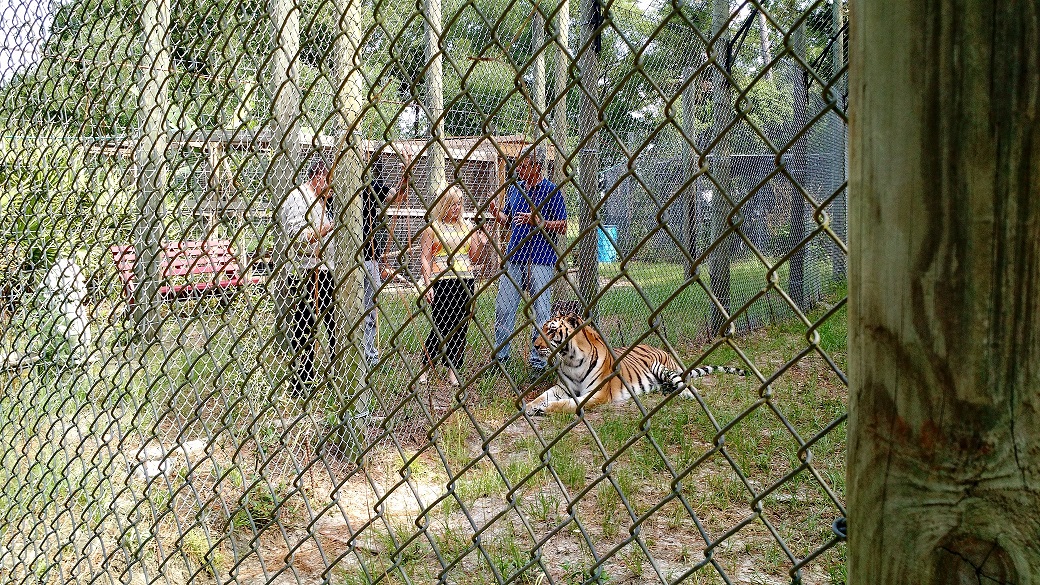
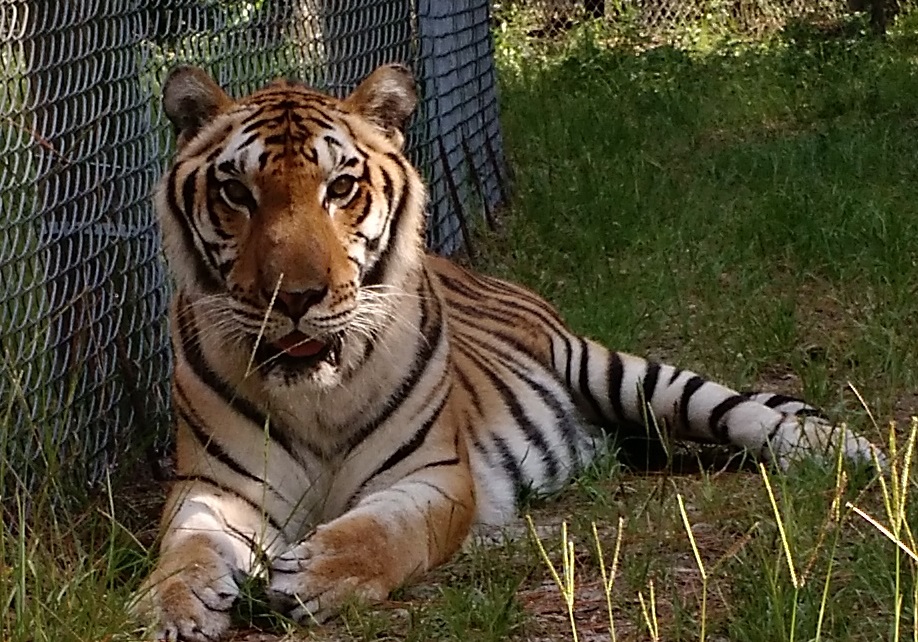
The Catalyst Refuge is a unique program that teaches relaxation techniques utilizing wild animals to facilitate healing. The program is based at The C.A.R.E. Foundation, a non-profit exotic animal rescue and sanctuary located in Apopka, FL. Catalyst founder Kevin Rose offers the program free to combat veterans, many of whom suffer from PTSD.


Kimberly Bermel/American Medicine Today: Give us some background about why you started this facility?

CatalystTiger2Kevin Rose/The Catalyst: The Catalyst is a human/animal interaction program that helps people move from feeling totally stressed out to absolutely calm in just seconds. As a massage therapist, I’ve worked with people for more than 20 years, all who have different kinds of stress. I found that there was one variable that brought everyone back to calm within seconds: using the five sense. I developed this program to promote the simplicity of learning to get calm. But the teachers that have been chosen, and have chosen me, perhaps, are the animals. They always live in their senses. They’re always responding to the environment with their senses. They taught me a valuable lesson about how to teach others how to use those inherent tools to calm in seconds.

Dr. Bonati/American Medicine Today: How did you put together the relationship between a person under stress, and an animal?

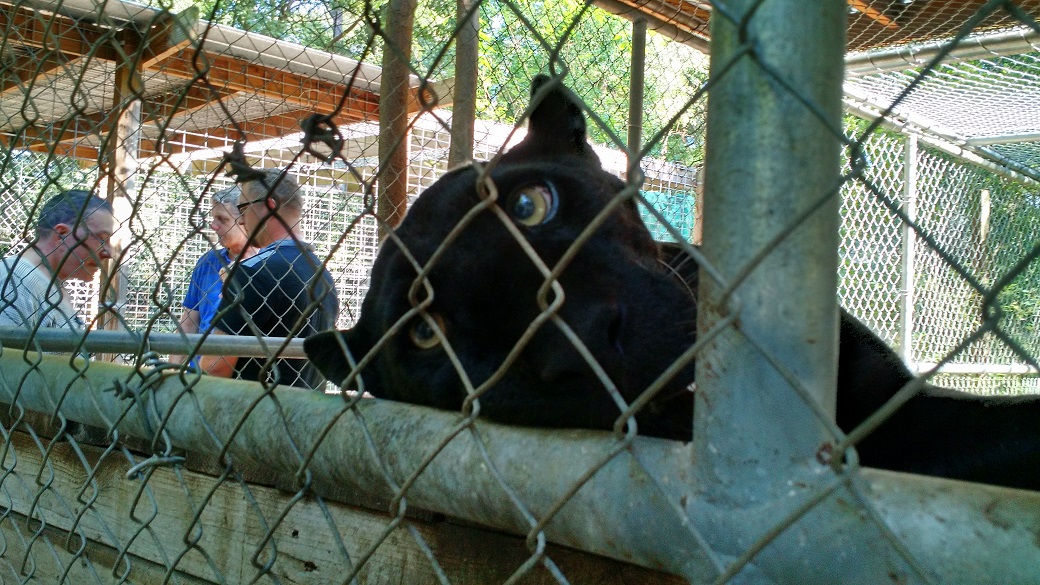
CatalystPantherKevin Rose: My whole career I’ve been fortunate and privileged to work with animals, as well as people. My first encounter was with dolphins, as a teaching assistant. During class, we were working in the water and swimming with a couple of dolphins. As I was swimming, the dolphins sandwiched me and began following my movements. It was if they were following my thoughts! I was amazed by it. Later, I had the opportunity to work hands-on with wolves. I recognized as I was in the middle of this wolf pack, and my energy raised and lowered, the animals would respond. They would growl and bump me.

Ethan Youker/American Medicine Today: If you’re anxious and upset and feeling aggressive inside, the animals reflect that?

CATalystTiger

Kevin Rose: That’s right. When I’d calm myself, they would reflect that as well. And that was my introduction to be able to work with the predatory animals specifically. There’s no real filter with them; they respond to the environment and what’s coming towards them. I started working more with them with the intention of bringing other people face-to-face with them to see how they would react. Like clockwork, the animals would react to the stress of that person. I teach this very simple technique that allows you to ground and the animal calms as well.

Ethan Youker: You’ve had a good success rate with soldiers who are diagnosed with PTSD?

Kevin Rose: Yes. It’s been a great time working with them and seeing how they respond to that sensory training. Think about how the universe is based on polarity: I know what hard is, because I know what soft is. When these men and women are trained in this heightened state, they can also know peace at that same degree.

CatalystPTSD
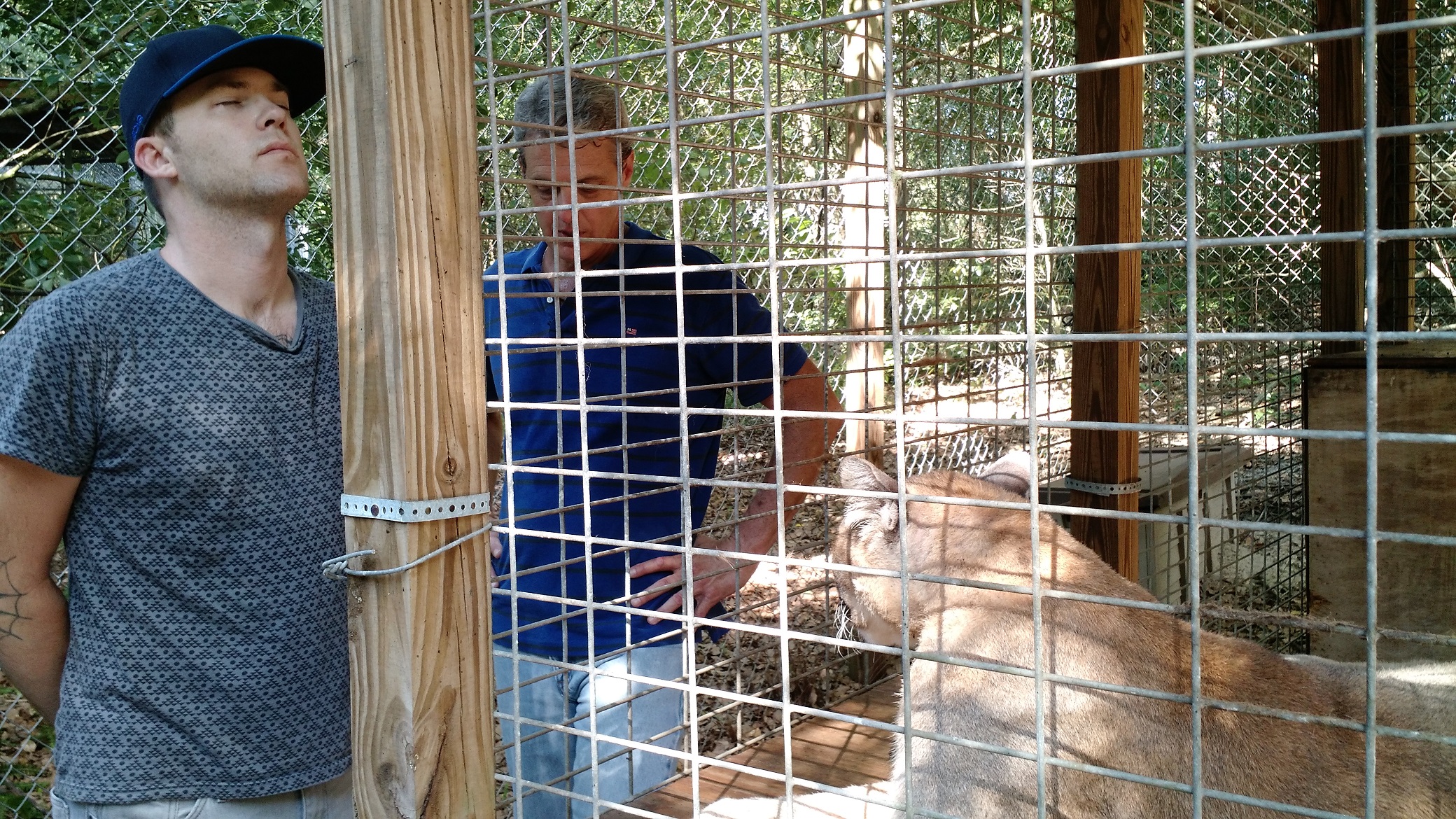
Chris is a Navy Veteran, diagnosed with PTSD, who uses techniques he’s learned through The Catalyst program to center and calm himself.

Chris/Navy Veteran who has trained with Kevin at Catalyst:  When I first came to Catalyst, I didn’t have any expectations; I didn’t come thinking these animals are going to react in a certain way. All I knew was to listen to Kevin and go with it. The first time that I stepped up to a cage I felt my shoulders tensing,  my stomach began to hurt, I was breathing heavy, my chest was getting tight and my pulse rate was going up. It was all of the things I was familiar with from having a panic attack. The animal started to growl and feed off of my negative energy. I used Kevin’s techniques to calm down and center myself. I immediately saw a reaction in the animals – I could see it in their eyes and in the way they were breathing. I no longer have tunnel vision. When I first came to Catalyst, I didn’t listen to anything. Kevin told me to listen to the birds. Before, I wouldn’t have heard them. It used to be that if I was driving my car, I didn’t hear anything. There was no outside world I was living in, it was just ‘what is right here.’ No, I have the ability to start hearing noises I naturally tuned out for many years. It’s opened my eyes.

Click here to learn more about The Catalyst Refuge.

Click here to learn more about the C.A.R.E. Foundation.


Facebooktwitterredditpinterestlinkedintumblrmail

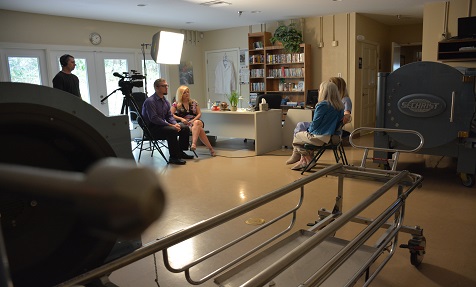
The National Hyperbaric Oxygen Therapy Center, located in Palm Harbor, FL, uses pressurized, concentrated oxygen to treat children with autism, as well as people with severe brain injuries.

Dr. Allan Spiegel says hyperbaric oxygen therapy increases the amount of oxygen that saturates every part of the body, 8-10 times more than is currently present. That turns oxygen into a drug, which can do several things:
Causes new blood vessels to grow
Increases white cell function
Enhances immune system

Johnathan Pineda was diagnosed with autism at age two, and has been non-verbal or limited in speaking most of his life. He began hyperbaric therapy as a teenager, and after 20 treatments, his mother notices amazing results. Johnathan admits he is more social, and says he feels more comfortable talking with people.

Alexandra Thomas went in to cardiac arrest and wasn’t expected to survive. However, she pulled through but is undergoing intense physical and speech therapy. Hyperbaric treatment has been added as a part of her treatment plan. Her mother says that four treatments, Alex is able to carry on longer conversations than she has since she became sick.

Learn more about The National Hyperbaric Oxygen Therapy Center: http://www.florida-oxygen.com/

Facebooktwitterredditpinterestlinkedintumblrmail

BioLucid, located in Sarasota, FL, is a technology company specializing in digital health. BioLucid’s advanced visual platform is designed to personalize and improve the overall health experience for both healthcare providers and consumers. Learn more about the creators, and designers, behind BioLucid in this one-on-one interview.

Learn more about BioLucid: http://www.biolucid.com/about-us/