


The American Medicine Today crew visits David Rose of Cape Coral, FL as he tells us his story of recovery from low back pain.

The American Medicine Today crew visits David Rose of Cape Coral, FL as he tells us his story of recovery from low back pain.


In January 1988, Martin Pistorius, 12, fell inexplicably sick. First he lost his voice and stopped eating. Then he slept constantly and shunned human contact. Doctors were mystified. Within 18 months he was mute and wheelchair-bound. Martin’s parents were told an unknown degenerative disease left him with the mind of a baby and less than two years to live.
Martin was moved to care centers for severely disabled children. The stress and heartache shook his parents’ marriage and their family to the core. Their boy was gone. Or so they thought.
“Ghost Boy,” is Martin’s story, chronicling his return to life through the power of love and faith. Readers see a parent’s resilience, the consequences of misdiagnosis, abuse at the hands of cruel caretakers, and the unthinkable duration of Martin’s mental alertness betrayed by his lifeless body.
Learn more about Martin via his website, http://www.martinpistorius.com/tmpsite/#home
Orthopedic surgeon Alfred O. Bonati on ObamaCare, and what he says are the many “lies and problems” that have plagued this flawed policy from its inception. He also addresses the multitude of mishandled issues that have occurred during Mr. Obama’s presidency, including scandals with veterans’ care, security lapses at Benghazi, targeted IRS investigations, and disappointing policies on immigration.
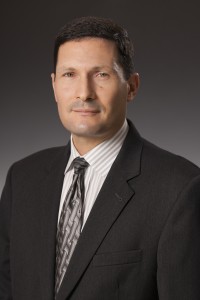


The VA healthcare system has been called “a corrosive culture resistant to reforms and change by Obama’s Deputy Chief of Staff, Ron Nabors.” (Read the publicly released summary of the Rob Nabors report from June 2014 at this link). American Medicine Today Radio spoke to Darin Selnick, Senior VA Adviser of the Concerned Veterans for America (CVA) about the CVA’s Fixing Veterans Health Care Task-force.
Ethan Youker/American Medicine Today host: From 2001-2009, you were an appointee at the Department of Veterans Affairs. You’re also a veteran of the Air Force. You’ve been entrenched with this issue for a long time. What has changed over the years, from when you served under President Bush to now under the current administration?
Darin Selnick/Concerned Veterans for America: What’s changed is the leadership and management. Ultimately, it’s a failing system. We had a lot of the problems, and recognized a lot of the problems, and we passed those continuity binders to the Obama folks and they disregarded them. So, we’ve known we needed fixes for a while. When you have really good leadership, you’re able to put a lid on the problems, and deal with a lot of it. New leadership came in, they didn’t listen to anybody, they did untenable things like changing performance measures to stuff that people couldn’t do, and it just caused a collapse to the system, quicker than it would have happened. It would have eventually happened.
Kimberly Bermel/American Medicine Today host: Congressman David Jolly was a guest on our program recently. He mentioned the Choice Card program, which was supposed to alleviate problems, some of which lead to deaths. (Learn about Choice Card .) A Veterans of Foreign Wars report found that only 1 in 5 veterans eligible for the Choice Card were offered the option to get private care outside of the Veterans Affairs Department.
Darin Selnick: 27,000 of the hundreds of thousands of veterans that have tried to do use Choice Card were able to do it. The VFW surveyed its members and only 20% of those that tried could get any access whatsoever. Basically, the Choice Card was considered a Band Aid. — $10 Billion or 2-3 years, whichever ran out first. It was always a “stop the bleeding” approach. But there’s no real choice when you have to ask permission. I knew in the very beginning – and I warned them – that if you give the VA an opportunity to play around with the parameters of getting that choice (such as waiting more than 30 days for VA medical care, or living more than 40 miles away from a VA medical facility), you’re in real trouble.
Ethan Youker: The Veterans Choice card program was supposed to alleviate some of these horrendous wait times. Where did this program go wrong?
Selnick: First, they were very late in issuing the (Choice) Cards. Second, they did rules changes. Congress said “hey do 40 miles and then there are exceptions,” but the VA interpreted it as ‘40 miles from any facility’, not the intent. which was 40 miles from where you needed the healthcare. Then Congress’s recommendation of 30 days from your desired date for an appointment was changed to 30 days from when the VA decided it was medically necessary. For example, when is a colonoscopy medically necessary? You could push it back a year and say you’re still not late. Intent is everything and the VA really didn’t want to let veterans go outside, so it started doing whatever it could. Also, Congress said, “pay Medicare rates, but there’s an exception if you need to.” It (the VA) started paying 30% less. What doctor or health plan is going to be able to accept patients’ 30% less than Medicare rates, which are already lower?
Youker: The Concerned Veterans for America have come up with something called the Veterans Independence Act and it’s supposed to right all of these wrongs that were supposed to be righted in the first place with this program.
Selnick: You need to fix the VA healthcare, and you’ve got to provide choice. If you make it an independent, government-chartered non-profit, accountable, healthcare organization, and not be a monopoly, it will be able to reform itself and make business decisions. Right now it doesn’t control its IT, doesn’t control its personnel, how much money it pays its doctors. It’s got government rates, so it’s got lots of problems. The other thing is offering enrolled choice. Our plan (www.CV4A.org) says if you like your veterans healthcare, you’re close to a facility, and you’re getting good healthcare, you can keep that. But if you don’t like your healthcare for any reason, it’s your choice to leave it. No 40 miles, no 30 day rule. You can be in one or the other. You can pick any healthcare plan in your state.



 Although opioids are frequently prescribed to treat chronic lower back pain, new research suggests these powerful medications may be less effective in some patients.
A study published in the Online First edition of Anesthesiology, the official medical journal of the American Society of Anesthesiologists® (ASA®), found patients who were prescribed opioids to treat chronic lower back pain experienced significantly less pain relief and were more likely to abuse their medication when they had psychiatric disorders such as depression or anxiety.
“High levels of depression and anxiety are common in patients with chronic lower back pain,” said Ajay Wasan, M.D., study author and professor of anesthesiology and psychiatry at the University of Pittsburgh School of Medicine. “Learning that we are able to better predict treatment success or failure by identifying patients with these conditions is significant. This is particularly important for controlled substances such as opioids, where if not prescribed judiciously, patients are exposed to unnecessary risks and a real chance of harm, including addiction or serious side effects.”
Chronic lower back pain affects 50 million adults in the United States. Patients with lower back pain may experience depression or anxiety in response to their chronic pain.In the prospective cohort study, researchers examined 55 chronic lower back pain patients with low- to-high levels of depression or anxiety symptoms. Patients were given morphine, oxycodone or a placebo to take orally for the pain as needed over a six-month period. Patients recorded their pain levels and the doses taken daily.Patients with high levels of depression or anxiety experienced 50 percent less improvement in back pain (21 percent vs. 39 percent pain improvement), 75 percent more opioid abuse (39 percent vs. eight percent), and increased side effects when compared to patients with low levels of depression or anxiety symptoms.
“It’s important for physicians to identify psychiatric disorders prior to deciding whether to prescribe opioids for chronic back pain as well as treat these conditions as part of a multimodal treatment plan,” said Dr. Wasan. “Rather than refusing to prescribe opioids, we suggest that these conditions be treated early and preferably before lower back pain becomes chronic. For those prescribed opioids, successful treatment of underlying psychiatric disorders may improve pain relief and reduce the chance of opioid abuse in these patients.”
The authors note that further testing is needed to confirm whether treating psychiatric disorders early in the course of lower back pain can solely improve pain and function without the use of opioids or other treatments.
REPOST FROM AMERICAN SOCIETY OF ANESTHESIOLOGISTS (ASA) July 6, 2015: Opioids May Not Spell Relief for Chronic Back Pain Sufferers with Depression, Anxiety
Founded in 1905, the American Society of Anesthesiologists (ASA) is an educational, research and scientific society with more than 52,000 members organized to raise and maintain the standards of the medical practice of anesthesiology. ASA is committed to ensuring that physician anesthesiologists evaluate and supervise the medical care of patients before, during, and after surgery to provide the highest quality and safest care that every patient deserves. For more information on the field of anesthesiology, visit the American Society of Anesthesiologists onlineatasahq.org. To learn more about the role physician anesthesiologists play in ensuring patient safety, visit asahq.org/WhenSecondsCount