American Medicine Today visits with Sense-A-Life in Tampa, Florida.
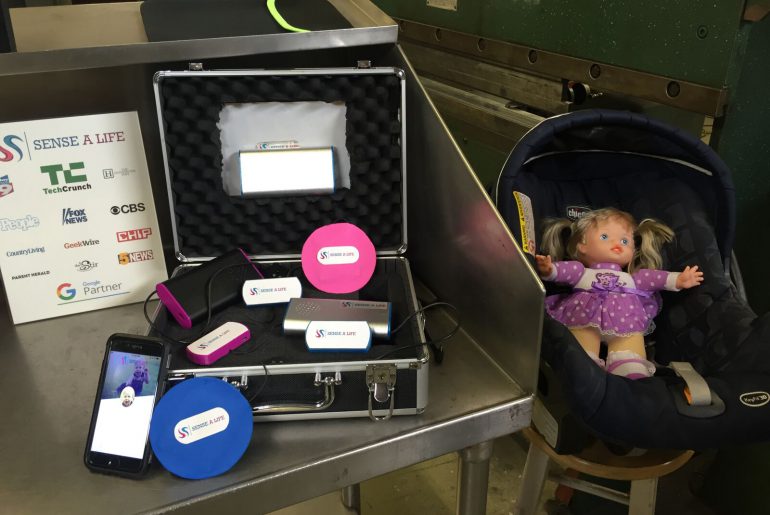
On average, 37 children die after being left in hot cars each year in the US alone. That’s roughly one child every nine days. Thousands more are hospitalized due to heat stroke or heat related injuries. We speak with Fadi Shamma, co-creator of Sense-A-Life, about this device and how it works with your smart phone to ensure no child is ever left in a hot car.
American Medicine Today visits with the University of Florida in Gainesville, Florida.
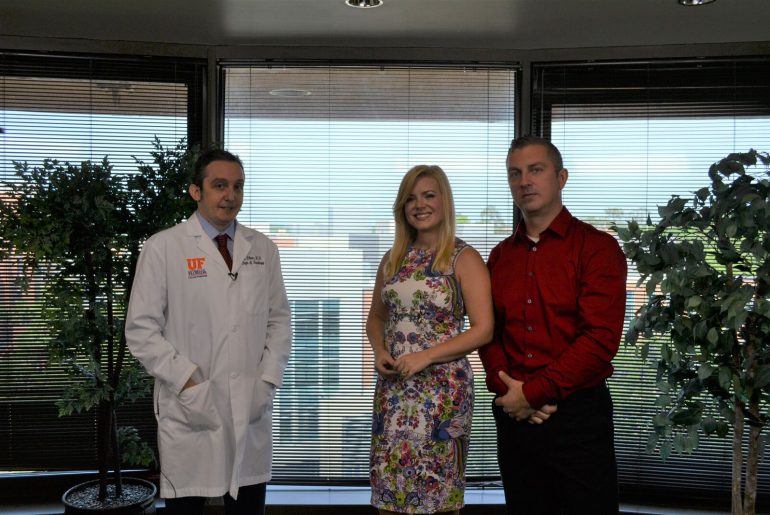
Deep Brain Stimulation (or DBS) is a type of advanced therapy for treating Parkinson’s Disease that takes advantage of the circuits of the brain. While not a cure for the illness, it can lessen some of the symptoms dramatically. By surgically placing a small probe inside the brain, doctors can monitor and manipulate the electrical signals transmitted throughout the body and alleviate tremors. We talk to Dr. Michael Okun, Chairman of the Department of Neurology at University of Florida and Dr. Kelly Foote, Co-Director of the University of Florida’s Movement Disorders Center about this amazing new therapy. We also visit with John Alexander, a tremor-dominant Parkinson’s Disease patient who was the first to receive this DBS system.
American Medicine Today visits with the University of Central Florida in Orlando, Florida.
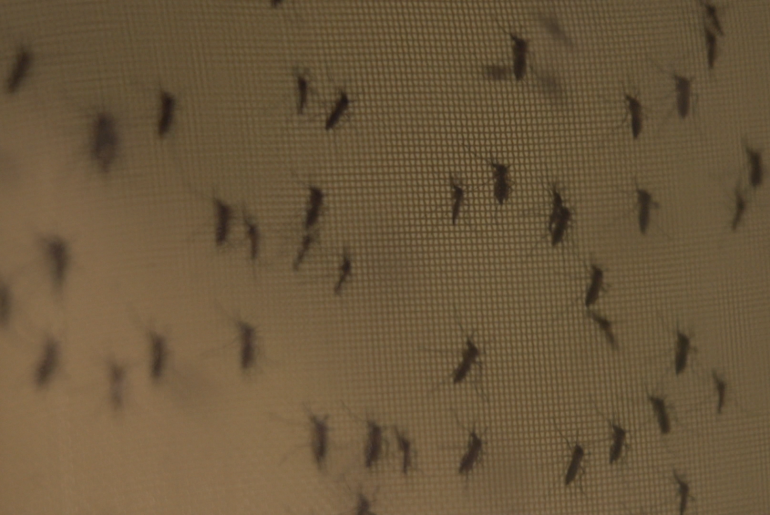
The Zika virus was first identified in Uganda in 1947. Though similar to other diseases transmitted by mosquitoes, it is not fatal; however, Zika has been linked to severe birth defects in humans, which are the only carriers of the disease. We visit with Dr. Sudipta Seal, Interim Chair of the Materials Science and Engineering Department and Dr. Bradley Willenberg, Assistant Scientist at the College Of Medicine at UCF to learn more about a new mosquito surveillance tool which helps detect mosquitoes infected with the Zika virus.
American Medicine Today visited The McCormick Research Institute in St. Cloud, Florida.
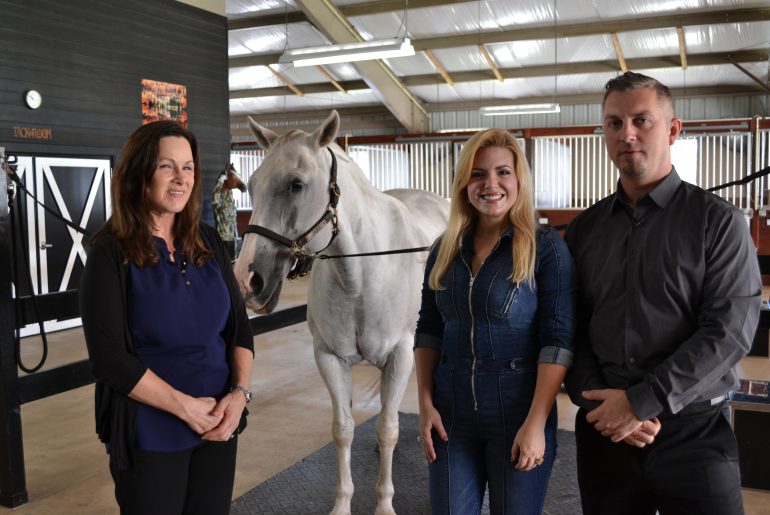
The Institute is home to ‘Horses & Heroes,’ a program for veterans suffering from PTSD and ‘Heavenly Hooves,’ another program serving special needs individuals. During the segment, we speak to Dr. Manette Monroe, Professor of Pathology at the University of Central Florida and Director of Research at McCormick Institute, as well as Caity Wall, the ‘Horses & Heroes’ Program Manager. We also hear program success stories from Shemallian “Shemmy” Arrieta, a Second Class Master-At-Arms in the Navy, and a Corporal E4 in the Marine Corps and Francesca Langston, a Corporal in the Marine Corps.
To learn more about The McCormick Research Institute and their equine therapy programs, visit the link here: http://mccormick.us/
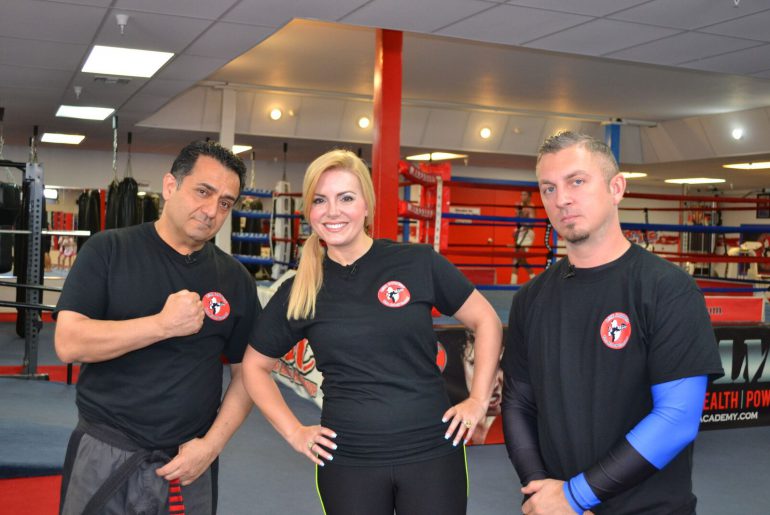
American Medicine Today visits with Amir Academy of Martial Arts in St. Petersburg, Florida.
According to the National Center for Educational Statistics in 2016, more than 1 out of every 5 children reported being bullied at school. Amir Academy’s martial arts program teaches kids self-confidence as a means to deter bullying, as well as the skills necessary to defend themselves if things escalate. During the segment we speak to owner and head instructor, Master Amir Ardebily, who has been practicing martial arts for over 48 years and has had a school in St. Petersburg for over 30 years. We also speak to two students, Carter and Evan, about what they’ve learned since joining the Academy and how these skills are applied to their time at school.
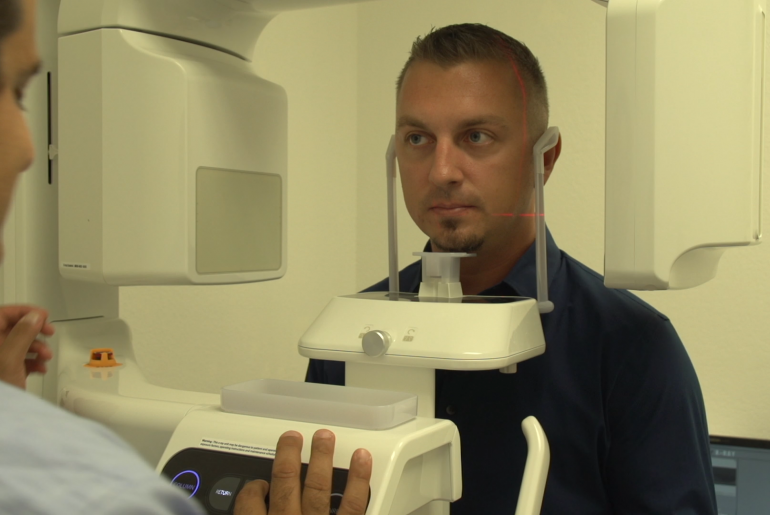
The American Medicine Today crew visits with the team at FeatherSound Smiles in Clearwater, Florida.
At FeatherSound Smiles, Dr. Amir Daoud, DDS is passionate about utilizing the latest technology for better quality care of his patients, as well as a more enjoyable overall experience. Dr. Daoud treats common dental issues, like cavities, teeth whitening, implants, and impressions with the newest lasers and digital imagery techniques.
Dr. Daoud says, “I have a rule called the ‘Mother Rule’: What would I do if the patient were my mother? It’s very simple and makes me sleep well at night. I never recommend treatment that I wouldn’t recommend to my mother. It makes perfect sense.”
American Medicine Today spent the day at the University of South Florida’s VR4VR facility.
Using Virtual Reality and Robotics Technologies for Vocational Evaluation, Training and Placement (VR4VR) is a project that incorporates Virtual Reality into job training to increase job opportunities for people who have physical or mental disabilities. The investigators are using Virtual Reality and robotics for job evaluation, training and placement of people with disabilities. The investigators’ goal is to assess and train people in a safe, adaptable, and fun virtual environment similar to a video game.
This is an interventional study with three target populations: autism spectrum disorder, traumatic brain injury, and severe mobility and manipulation impairments. The prototype system allows for a wide range of environments with the vocational evaluator easily controlling the virtual experience, while the job seekers interact realistically.
The Center for Assistive, Rehabilitation and Robotics Technologies at USF is a multidisciplinary center that integrates research, education and service for the advancement of assistive & rehabilitation robotics technologies. Researchers from various departments & colleges at USF including the College of Engineering, the School of Physical Therapy and Rehabilitation Sciences, the College of the Arts, and the College of Behavioral and Community Sciences collaborate on various projects.
CARRT’s mission is to improve the quality of life, and increase independence and community reintegration of individuals with reduced functional capabilities due to aging, disability or traumatic injury, as in the case of our wounded warriors, through integrated research, education and service in assistive and rehabilitation, and robotics technologies in collaboration with consumers, clinicians, government and industry partners.
American Medicine Today Radio talked to Nick Tomboulides, Executive Director of US Term Limits, a grassroots movement that works tirelessly to help people across the country better understand why term limits are a necessary government reform. The organization also advises citizens how to implement that vision from town council to Congress.
Whole Body Cryotherapy (WBC) exposes the body to ultra-low temperatures. This technique was first utilized in Japan in 1978 to treat rheumatoid arthritis. Studies conducted in Europe over the past two decades have established WBC as a treatment for inflammatory disorders and injuries. Some professional athletes, who have previously tried ice baths, use WBC as a powerful and effective therapy that decreases recovery time and increases athletic performance.
Foggiare Institute, a therapy and wellness center in Largo, FL, is now offering WBC through their cryosauna as a treatment for inflammation, to speed up recovery from surgery, or as an overall health and calorie-burning technique. The cryosauna exposes the body to -230 degree Fahrenheit, for 2-3 minutes at a time, using a dry cold mixture of nitrogen gas and air. This causes blood to ruse to the core of the body, and after the exposure to the low temperatures, oxygen- and plasma-rich blood flows throughout the body, nourishing cells. According to Foggiare, clients walk better, sleep better and find relief from inflammation and pain. Additionally, says Foggiare, your body burns a tremendous number of calories combating the instantly cold environment.
AMT hosts Ethan and Kimberly stepped inside the WBC and share their experiences.